


    CRM & Business Systems

    Bespoke CRM development for UK businesses

    The Digital Hub designs, builds and supports fully bespoke CRM and business systems for organisations throughout the UK. Based near York, our UK team creates systems around the way each business sells, serves customers, manages work and reports — rather than forcing the business into a standard CRM template.

    This is the right route when spreadsheets, disconnected tools or a configured platform no longer fit the process. It is not always the right route: where an established CRM would serve you better for less money, we will say so during discovery rather than after you have paid for a build.

    Free discovery sessionPhased deliveryOwnership agreed in writing

    450+

    Projects delivered across the team

    Full

    Code ownership

    20+

    Years of experience

    UK

    Design and delivery team

    What Is Custom CRM Development?

    Custom CRM Development organises customer, sales and operational records around the way your business actually works — pipelines, tasks, permissions, reporting and the connections to the systems already in use. It is most useful when generic pipelines, disconnected spreadsheets or per-seat software no longer fit the process.

    What a bespoke CRM replaces

    Most bespoke CRM projects start with the same picture: a spreadsheet holding the real pipeline, an inbox holding the real history, a generic CRM nobody updates, and a separate quoting, booking or membership tool that does not talk to any of them. A custom crm development project consolidates those into one record per customer, with the fields, stages and permissions that match how the team already works.

    Discovery, migration and the work before development

    The build is rarely the risky part. Data migration and process agreement are. We audit the existing records, agree the field mapping, run test imports and reconcile record counts and sample values against the source before cut-over, with a rollback position agreed in advance.

    Security, permissions and resilience

    Systems are designed with role-based, least-privilege access, an audit history of who changed what and when, encryption in transit and at rest where applicable, dependency management and tested backup and recovery arrangements agreed for the project. We do not publish absolute security promises or claim certifications we do not hold.

    Ownership and the commercial position

    You own your data. Source-code ownership or licensing, hosting accounts, documentation, export and handover are agreed in writing before development begins, so the position is never a surprise at the end of a project. Hosting and support are quoted separately from the build.

    Key Benefits

    01

    A data model built around your records — customers, jobs, members, properties or cases — rather than a generic contact list

    02

    Pipelines, stages, tasks and reminders that mirror the way your team already sells and delivers

    03

    Role-based permissions so people see the records and fields appropriate to their job

    04

    Reporting and dashboards drawn from one source of operational truth instead of reconciled spreadsheets

    05

    Connections to Microsoft 365, accounting software, your website and sector systems, scoped project by project

    06

    No per-user licence payable to us, and a documented ownership and export position

    What's Included

    Stakeholder interviews and process mapping
    Audit of existing systems, spreadsheets and data quality
    Data model, record relationships and required fields
    Roles and permissions matrix
    Pipelines, stages, tasks and follow-up workflows
    Quotes, proposals and document handling where required
    Dashboards, forecasting and management reporting
    Email and Microsoft 365 connections
    Data migration: cleansing, field mapping, test imports and reconciliation
    Audit history and role-based access controls
    Role-based training and written documentation
    Warranty period, then support against an agreed scope

    Ready to discuss custom crm development?

    450+ projects delivered across the combined experience of the team. Free consultation — no obligation.

    Reply within one working dayNo obligation
    Get Your Free Proposal

    Who Is This For?

    Teams whose process cannot be represented properly in a generic CRM

    Businesses duplicating the same information across spreadsheets, inboxes and separate tools

    Organisations where per-user licence costs have become disproportionate to the value delivered

    Companies needing the CRM to connect deeply with operational, accounting, website or sector-specific systems

    Businesses that need a customer, supplier or member portal alongside the internal system

    Management teams that cannot currently obtain reliable operational reporting

    Purpose-built CRM versus a configured platform

    How a purpose-built system compares with configuring an established platform such as Salesforce, HubSpot, Microsoft Dynamics or Monday.com. Both routes are legitimate; the right one depends on how far your process differs from the standard model.

    ConsiderationBespokeConfigured platform
    Data model matched to your record types
    Workflows and stages that follow your real process
    Customer, supplier or member portals
    Deep integration with operational and accounting systems
    No per-user licence cost as the team grows
    Full ownership of code, database and hosting
    Lowest upfront cost
    Large third-party app marketplace
    Fastest route to a basic contact and pipeline setup

    Why Choose The Digital Hub?

    A UK team based near York and delivering CRM projects nationally, remotely and on site where useful.

    20+ years of combined experience across CRM, operational software, portals and integrations.

    Discovery and process mapping before development, with a documented data model and permissions matrix.

    Phased delivery: each phase has a defined deliverable, so the project can be paused or re-aimed between phases.

    Named project evidence, including the RM English estate agency system.

    Ownership, hosting and support positions agreed in writing before development begins.

    Our Process

    Step 1

    Discovery & Process Mapping

    Stakeholder interviews, an audit of existing systems and spreadsheets, and a written map of the process the custom crm development has to support — including the exceptions.

    Step 2

    Data Model & Permissions

    Record types, relationships, required fields, roles and a permissions matrix, agreed and documented before development starts.

    Step 3

    Phased Build & Migration

    Development in phases with working software demonstrated at the end of each. Data migration is scoped separately: cleanse, map, test import, reconcile.

    Step 4

    Go-live, Training & Support

    Cut-over planning with a rollback position, role-based training, written documentation, then a warranty period followed by agreed support.

    Case Study

    Property & Estate Agency

    RM English Estate Agents

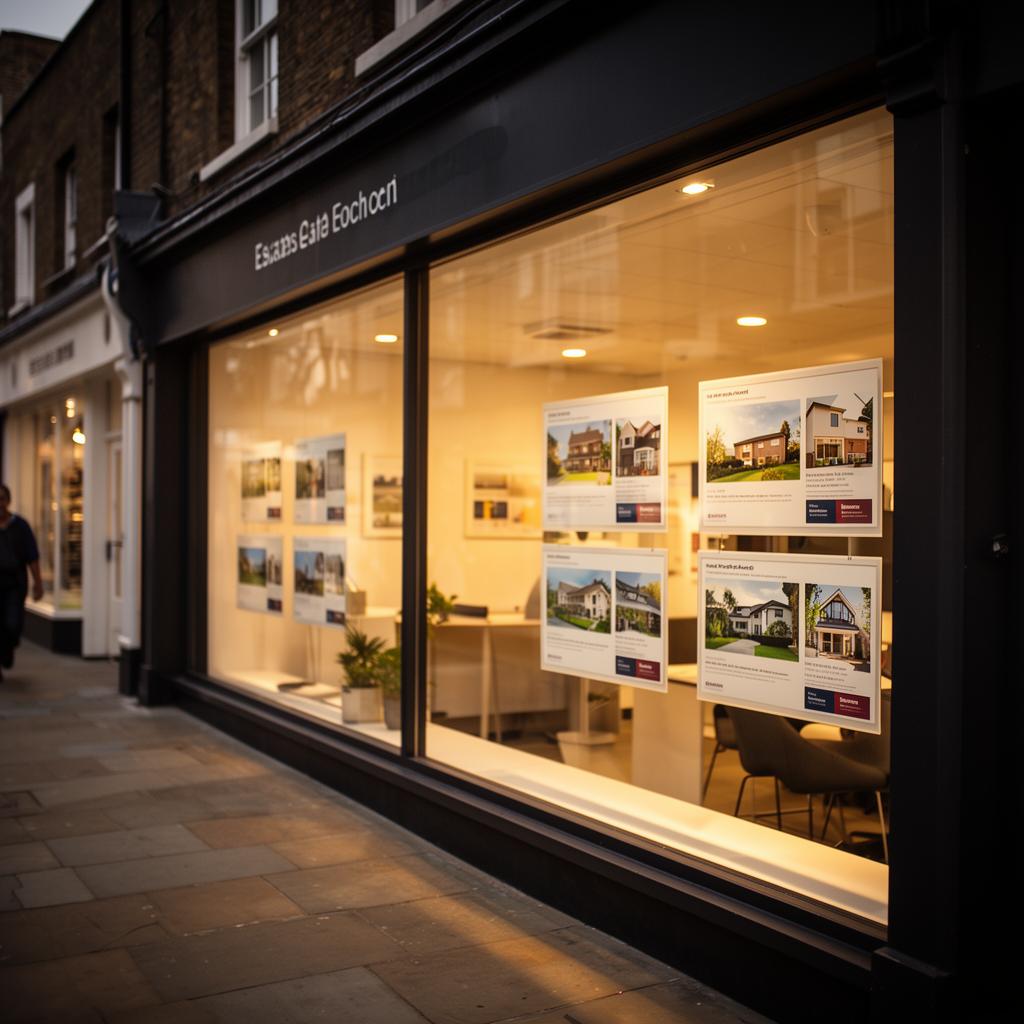
    RM English is an independently owned estate and land agency with three branches across North and East Yorkshire. They were locked into an expensive subscription-based property management solution that didn't match their workflows — and they wanted fu…

    −60%

    Annual software costs

    In-house (same day)

    Brochure production

    Instant (automated)

    Portal listing speed

    Significantly improved

    Staff satisfaction

    "I can't fault it! My staff are happy, the system does everything it should, and we can get on with selling and renting properties. We expect a return on investment within three years."

    — Richard English, Director
    Read Full Case Study
    RM English Estate Agents

    Industries We Serve

    Available Across the UK

    We deliver custom crm development for organisations across the United Kingdom. Our team is based at English House, Railway Street, Pocklington, York, and works nationally through remote discovery, structured workshops, regular demonstrations, test environments and on-site visits where they are useful.

    What a bespoke CRM actually replaces

    Most bespoke CRM projects start with the same picture: a spreadsheet holding the real pipeline, an inbox holding the real history, an off-the-shelf CRM nobody updates, and a separate booking, quoting or membership tool that does not talk to any of them. A bespoke system consolidates those into one record per customer, with the workflow, fields and stages that match how your team already works.

    What is included in a build

    • Process discovery

      Sessions with the people doing the work, mapped into a documented workflow before anything is designed.

    • Data model and permissions

      Record types, relationships, required fields and a role-by-role permissions matrix.

    • Interface design

      Screens built for the daily tasks, not a generic table view with 40 columns.

    • Integrations

      Website forms, email, calendars, payments, accounts software and any operational systems already in place.

    • Migration

      Existing records extracted, cleaned, imported and reconciled against source counts.

    • Training and handover

      Role-based training, written documentation and repository access.

    How to choose a UK company to build your CRM

    These are the questions worth asking any supplier, including us. Where a criterion does not apply to your project, say so early — it usually shortens the scoping conversation.

    1. 1

      Do they map your process before quoting?

      We run a discovery session covering the current workflow, the people involved and the systems already in use before any figure is given. A quote written without that is a guess.

    2. 2

      Is there a documented data model and permissions design?

      You receive a written data model and a permissions matrix showing who can see and change each record type, agreed before development starts.

    3. 3

      Is scope and price fixed per phase?

      Work is quoted phase by phase with a defined deliverable for each, so you can stop, pause or change direction between phases without losing what has been built.

    4. 4

      Do they demonstrate working software during delivery?

      You see the working system at the end of each phase, in your own browser, with your own data structure — not screenshots or a slide deck.

    5. 5

      How is existing data migrated and reconciled?

      Migration is scoped as its own piece of work: extract, clean, map, import, then reconcile record counts and spot-check values against the source before go-live.

    6. 6

      What security, backup and audit logging is included?

      Role-based access, encrypted storage, automated backups with a tested restore, and an audit trail of who changed what and when.

    7. 7

      Who owns the code and data, and how do you leave?

      You own the codebase, the database and the hosting accounts. Exit means handing over repository access and a runbook — there is nothing to negotiate.

    8. 8

      What do hosting and support actually cost?

      Hosting, support and ongoing development are quoted separately from the build so you can see the running cost before committing.

    9. 9

      Can they give references from comparable projects?

      We introduce you to a client running a system of similar size and complexity, subject to their agreement.

    10. 10

      Will they tell you not to build?

      If a configured HubSpot, Salesforce or Monday.com setup would serve you better, we say so during discovery rather than after you have paid for a build.

    When an off-the-shelf CRM is the better answer

    Under about ten users running a conventional lead-to-sale pipeline, a configured SaaS CRM is usually cheaper and faster to live than anything bespoke. Bespoke becomes justifiable when you have larger teams, a specialist workflow the market does not serve, a customer or member portal requirement, or several disconnected subscriptions that a single system would replace. The correct answer comes out of discovery, not out of a sales pitch.

    Indicative cost

    These are the same bands used in our full cost guide. A fixed quote follows scoping.

    Focused CRM for a small team

    £8,000–£20,000

    One core workflow, a clean data model, website and email integration.

    Departmental CRM

    £20,000–£45,000

    Several linked workflows, migration, reporting and role-based permissions.

    Operational platform

    £45,000–£100,000+

    Portals, payments, multi-team permissions and deeper systems integration.

    Read the full breakdown: how much a bespoke CRM costs in the UK

    Verified CRM and business-system work

    RM English

    Problem
    Property enquiries, valuations and applicant records spread across inboxes and spreadsheets.
    Delivered
    A connected website and business system with a single record per applicant and property.
    Outcome
    A single source of enquiry data across the branch network.
    Read the RM English case study

    Association of Independent Celebrants

    Problem
    Membership administration, renewals and directory listings handled manually.
    Delivered
    A membership operating system covering joining, renewals, directory and member communications.
    Outcome
    Manual renewal administration replaced with an automated cycle.
    Read the Association of Independent Celebrants case study

    Read next

    Frequently Asked Questions

    Related Services

    Get Started

    Ready to own your
    digital infrastructure

    Book a free infrastructure audit. We'll map your current systems, identify gaps, and show you exactly how a connected digital platform can transform your business.

    Reply within one working dayNo obligation, no pressureFree infrastructure audit included

    Prefer to talk? 01904 900201