Hospitality 11 min
How to Reduce Airbnb Costs and Keep More Profit
Airbnb fees, commissions and discount pressure quietly erode host margins. Here's how to reduce Airbnb costs and build a direct booking channel that protects your profit.
Read
Tom Beachell
Director
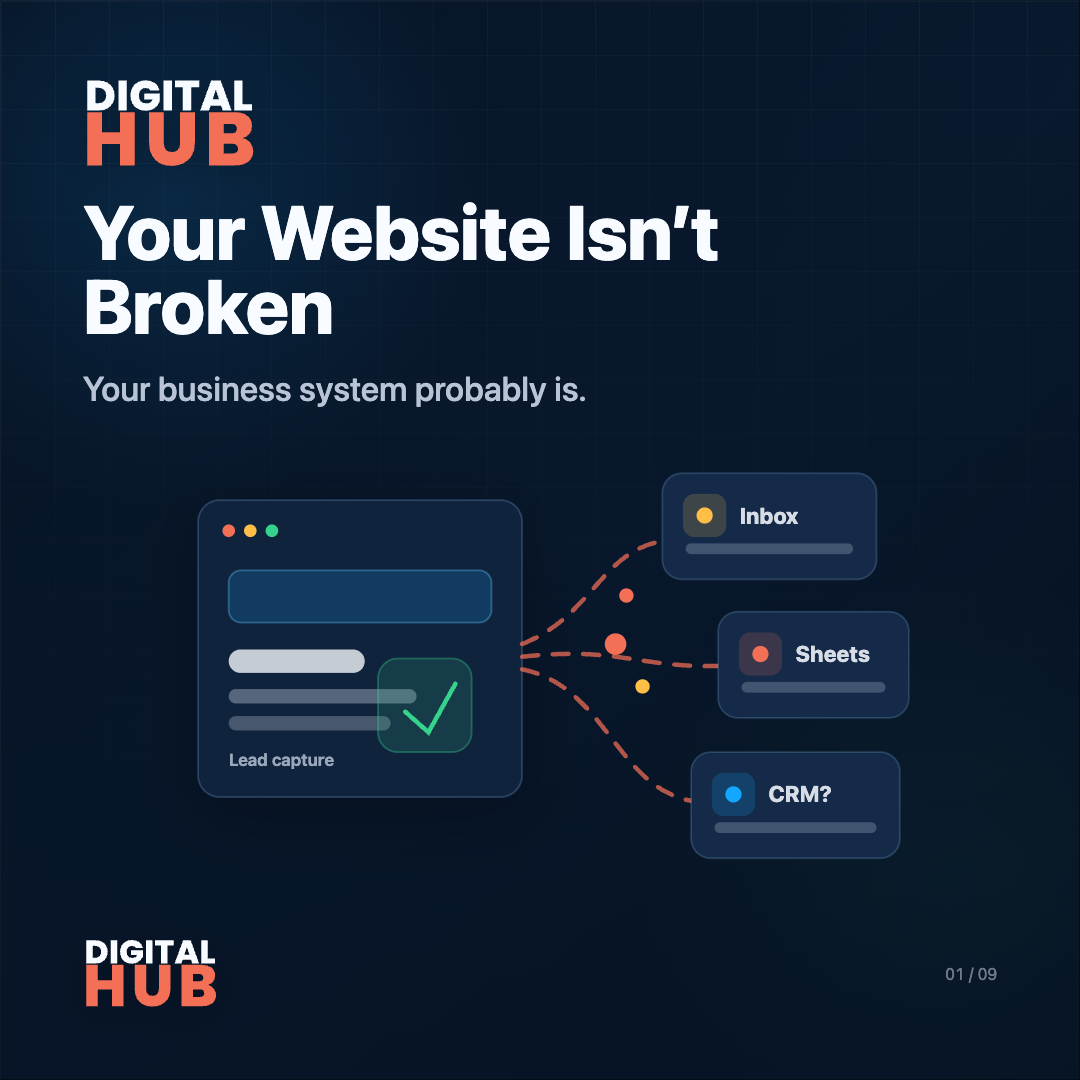
Your website probably is not the real problem. Your business system is.
Most UK business owners we speak to have already invested in a smart-looking website. The branding is sharp, the photography is decent, the copy is reasonable. And yet the enquiries are thin, the bookings are inconsistent, and the sales pipeline never quite fills the way the marketing budget suggested it would.
The instinct is to blame the site. Redesign it. Add another landing page. Buy more ads. Pay another SEO agency. But in our experience working with UK companies on digital infrastructure projects, the website is rarely the weakest link. The weakest link is the system sitting behind it — the CRM, the follow-up process, the automation, the reporting and the way enquiries are actually handled once they land.
If your website is not generating leads, the honest answer is usually this: the front door is fine. The building behind it is broken.
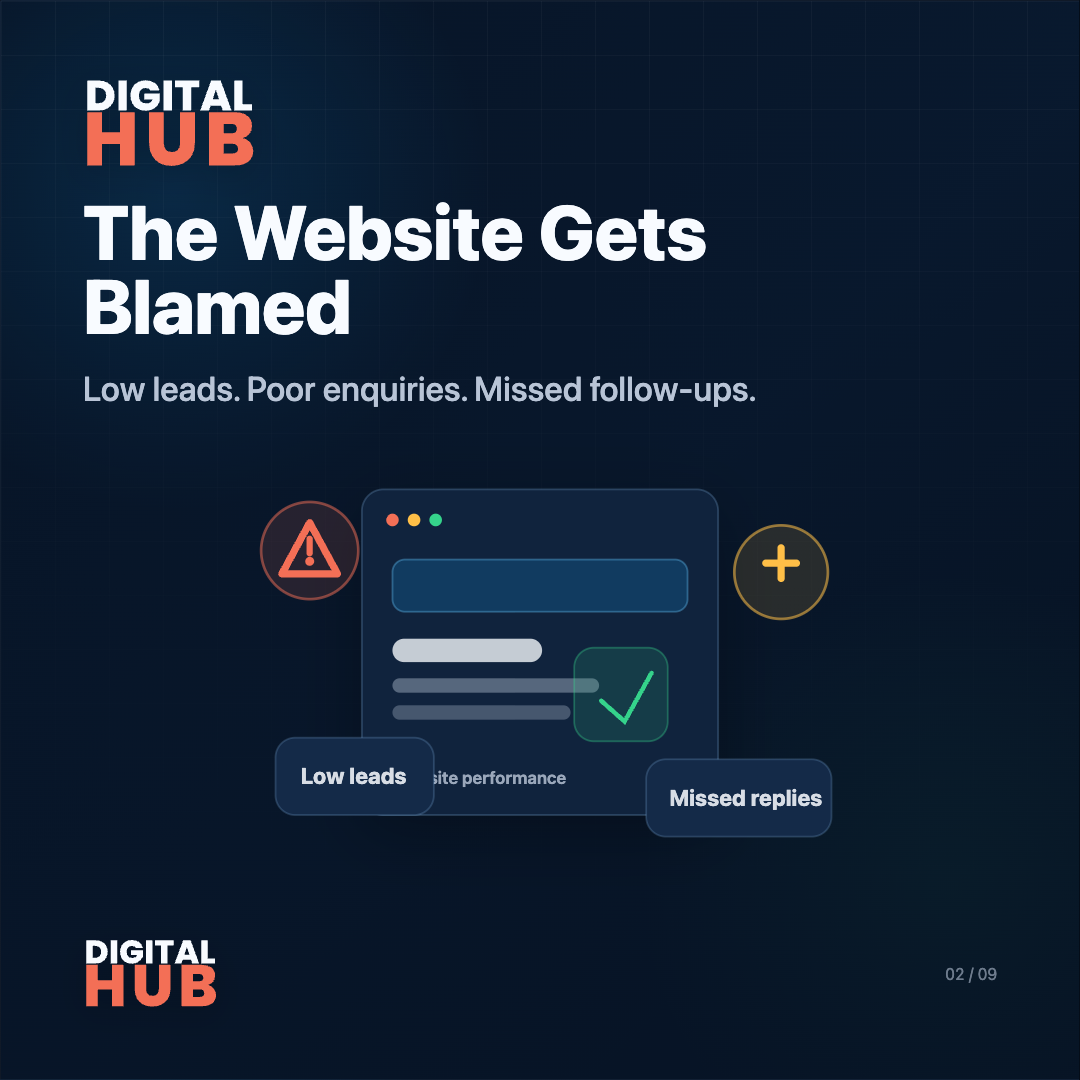
A business website not working as a lead engine usually shows up as a familiar pattern of symptoms. Read this list and be honest about how many apply to you.
Low enquiry volume despite reasonable traffic.
Poor quality leads that never convert into real conversations.
Missed follow-ups because nobody owns the next step.
No clear source tracking, so you cannot say which channel produced which lead.
Slow response times, often measured in days rather than minutes.
Manual admin around every enquiry — copying, pasting, retyping.
Leads sitting in shared inboxes that nobody actively manages.
No CRM integration, so the website and the sales system live in different worlds.
No automation after enquiry, so every lead depends on human memory.
The website may be doing part of its job. It is attracting visitors and capturing form submissions. But the business has no proper system for handling what happens next, and that is where the revenue quietly disappears.
When leads are weak, the website becomes the obvious scapegoat. It is the most visible asset, the easiest thing to criticise, and the part of the marketing stack that everyone has an opinion about.
So the conversation usually goes the same way. The team decides they need:
A redesign.
More traffic.
More SEO.
More paid ads.
Better visuals or a slicker brand.
Sometimes those things genuinely help. More often, they paper over a deeper problem. You can pour more traffic into a site, but if the lead handling process behind it is weak, you simply waste more leads at a higher cost. A prettier website does not fix a broken pipeline. More ad spend does not fix a CRM that nobody updates.
Before you commission another redesign, it is worth looking at what is actually happening on the other side of the contact form.
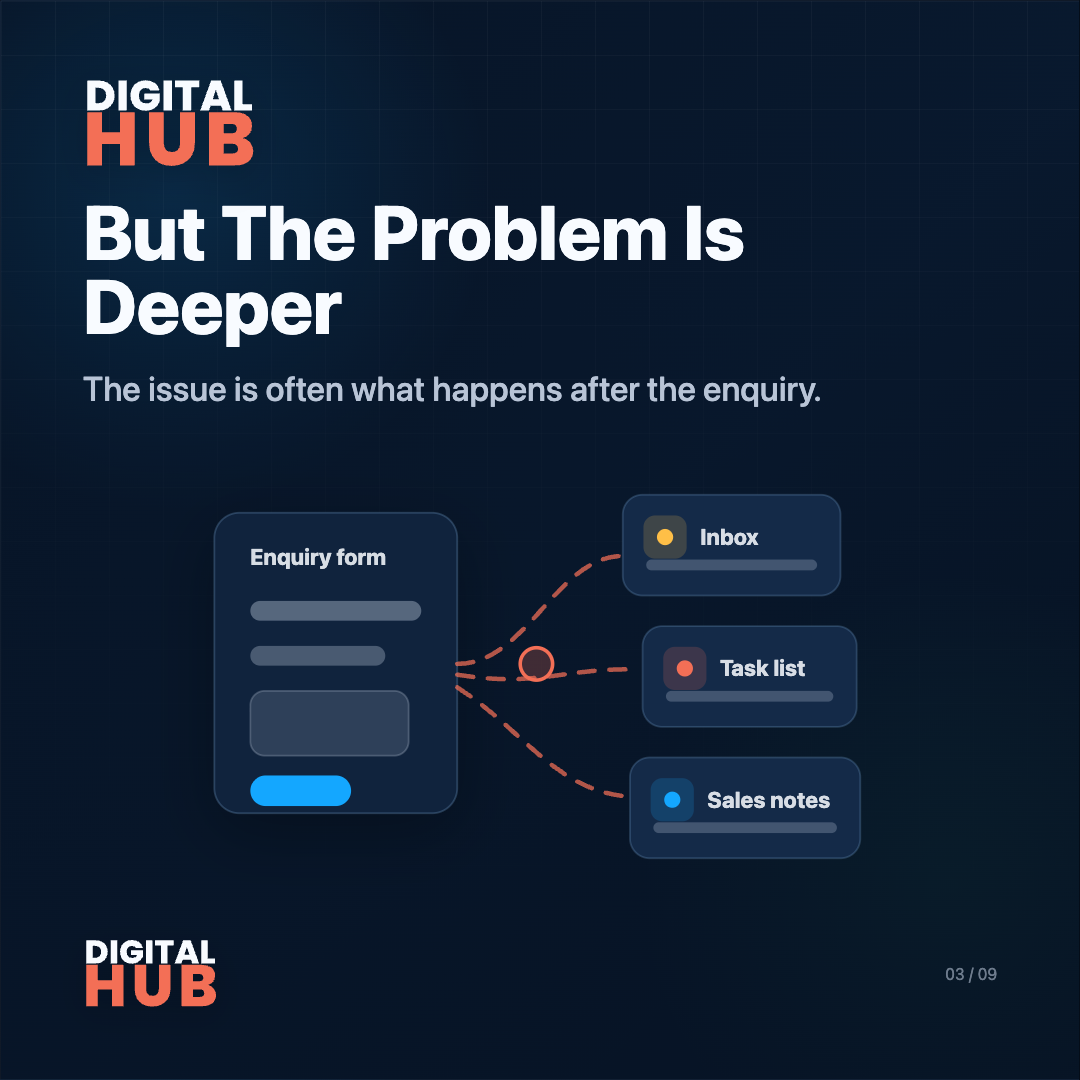
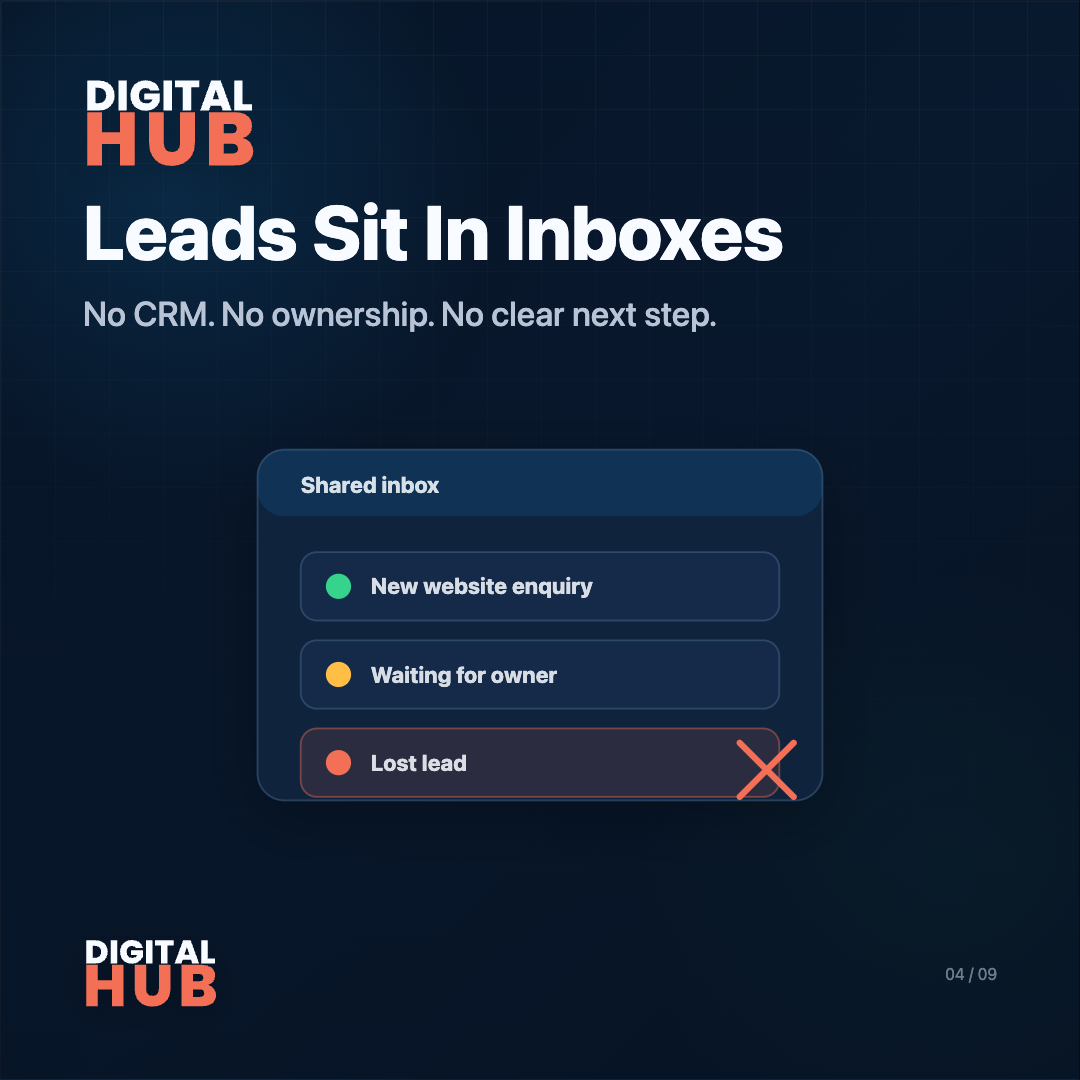
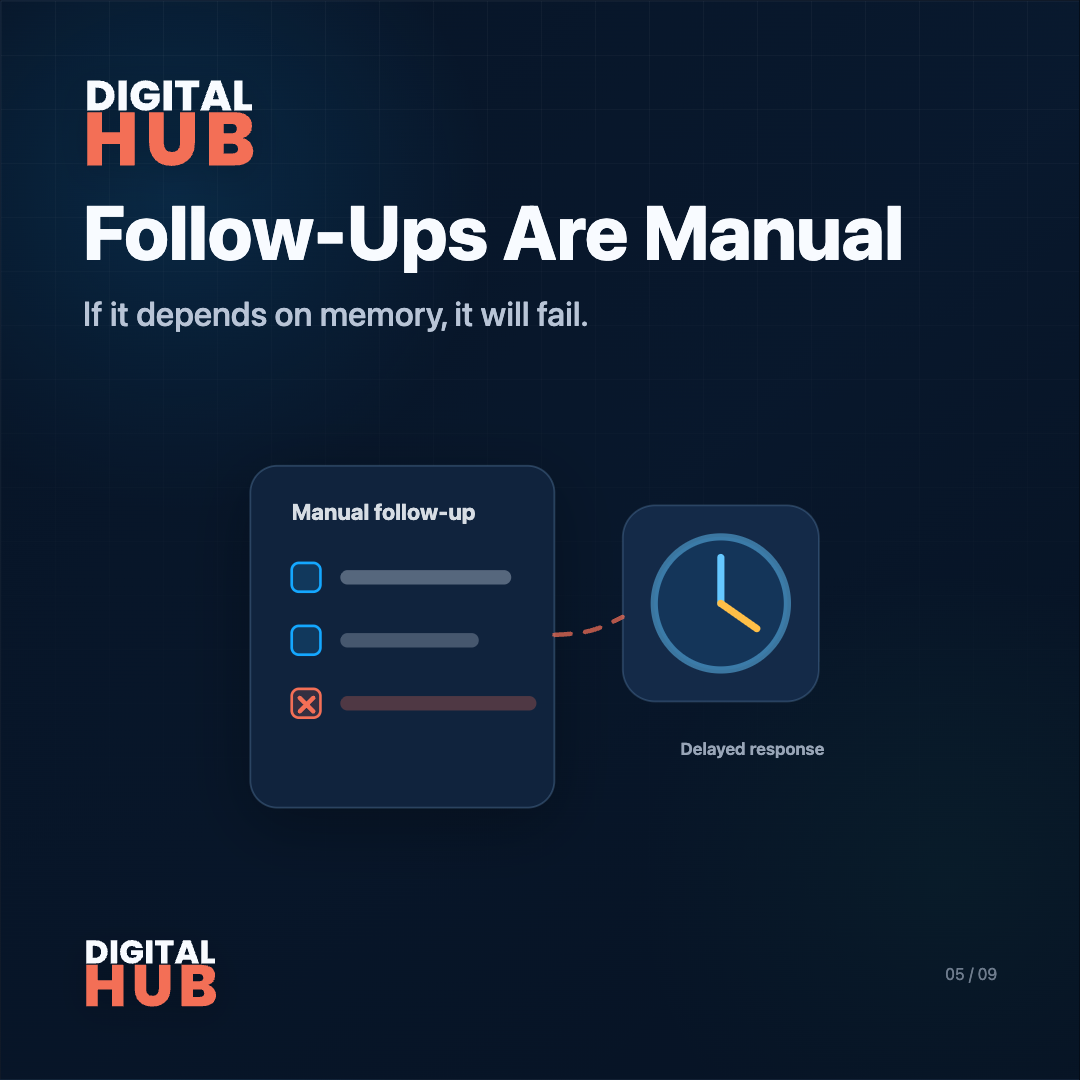
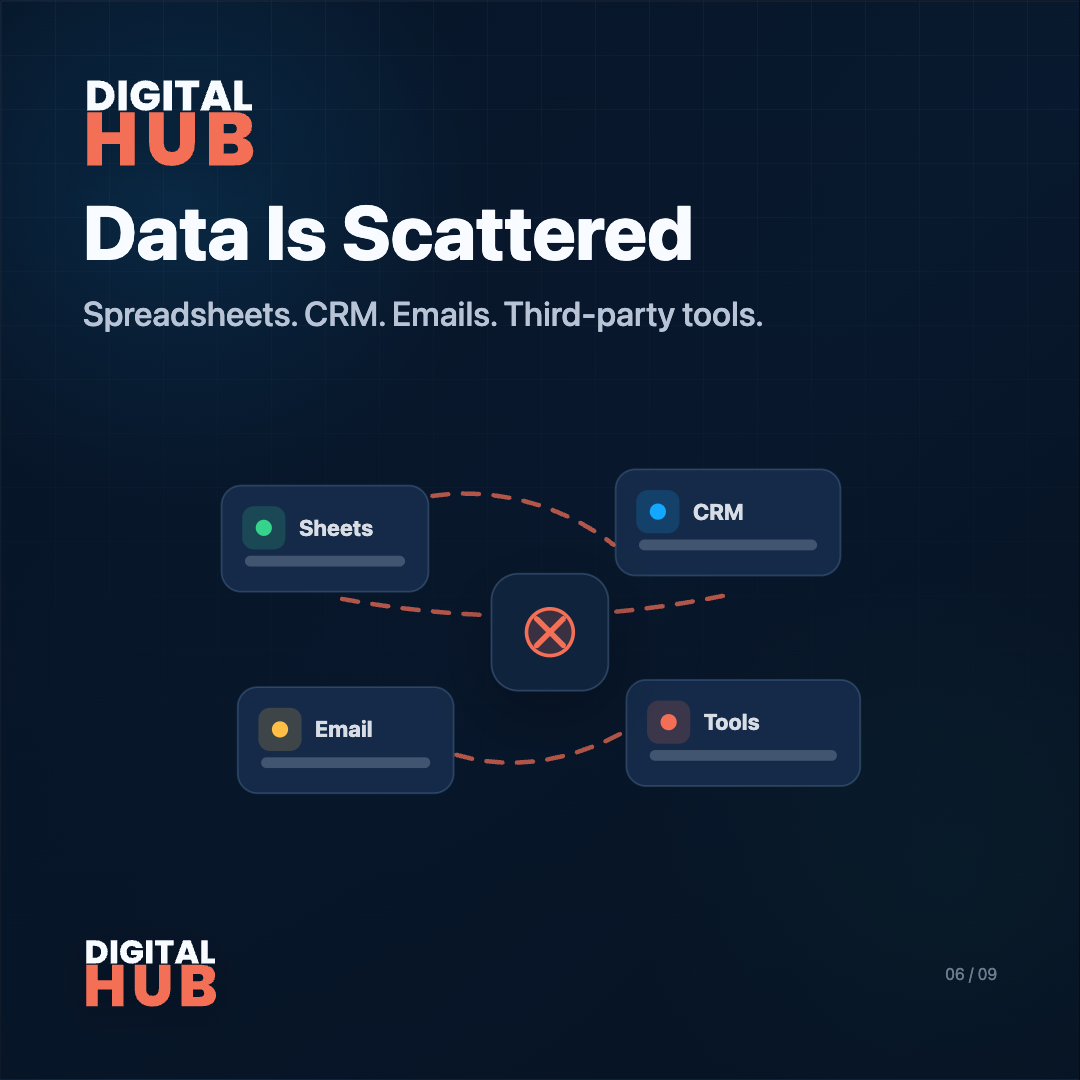
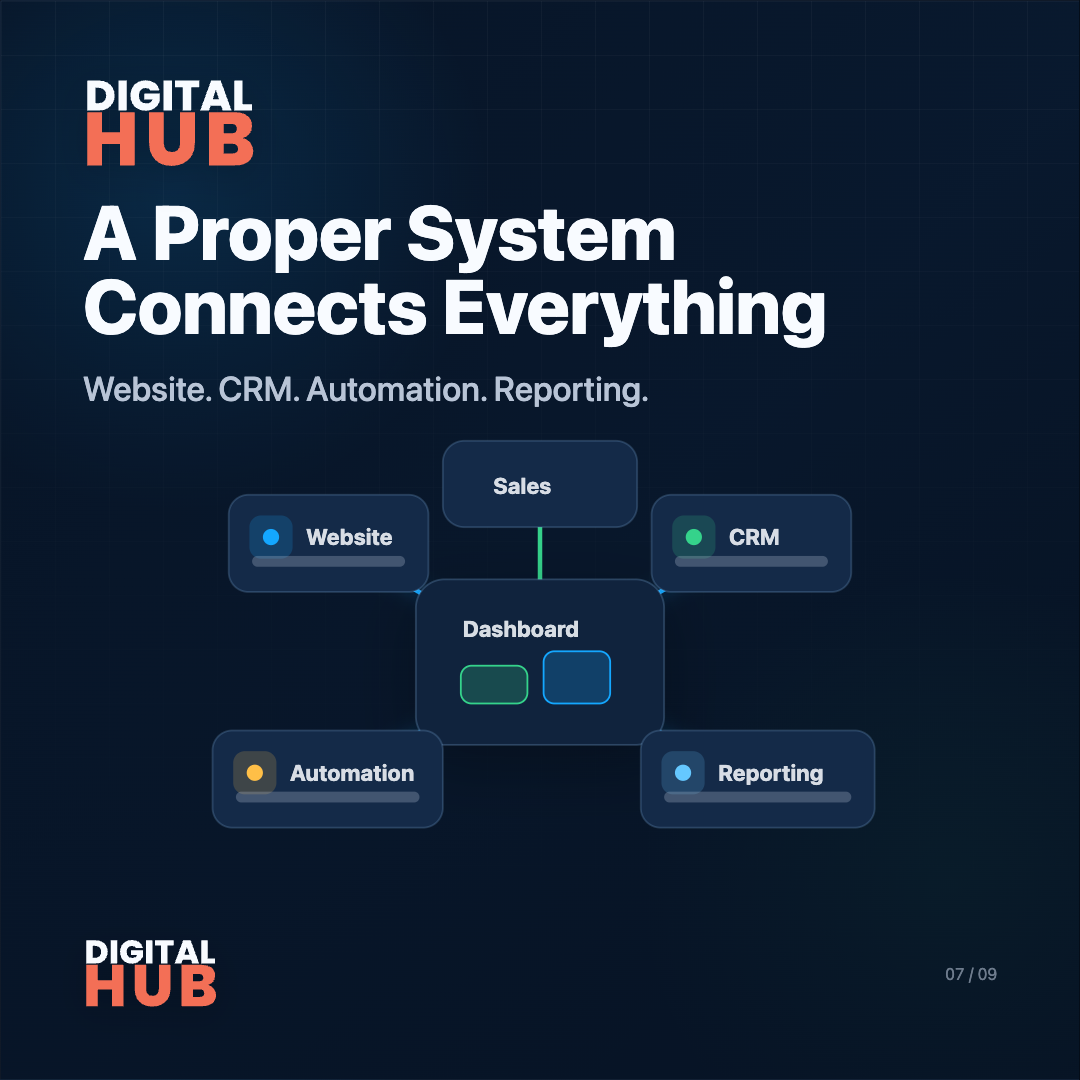
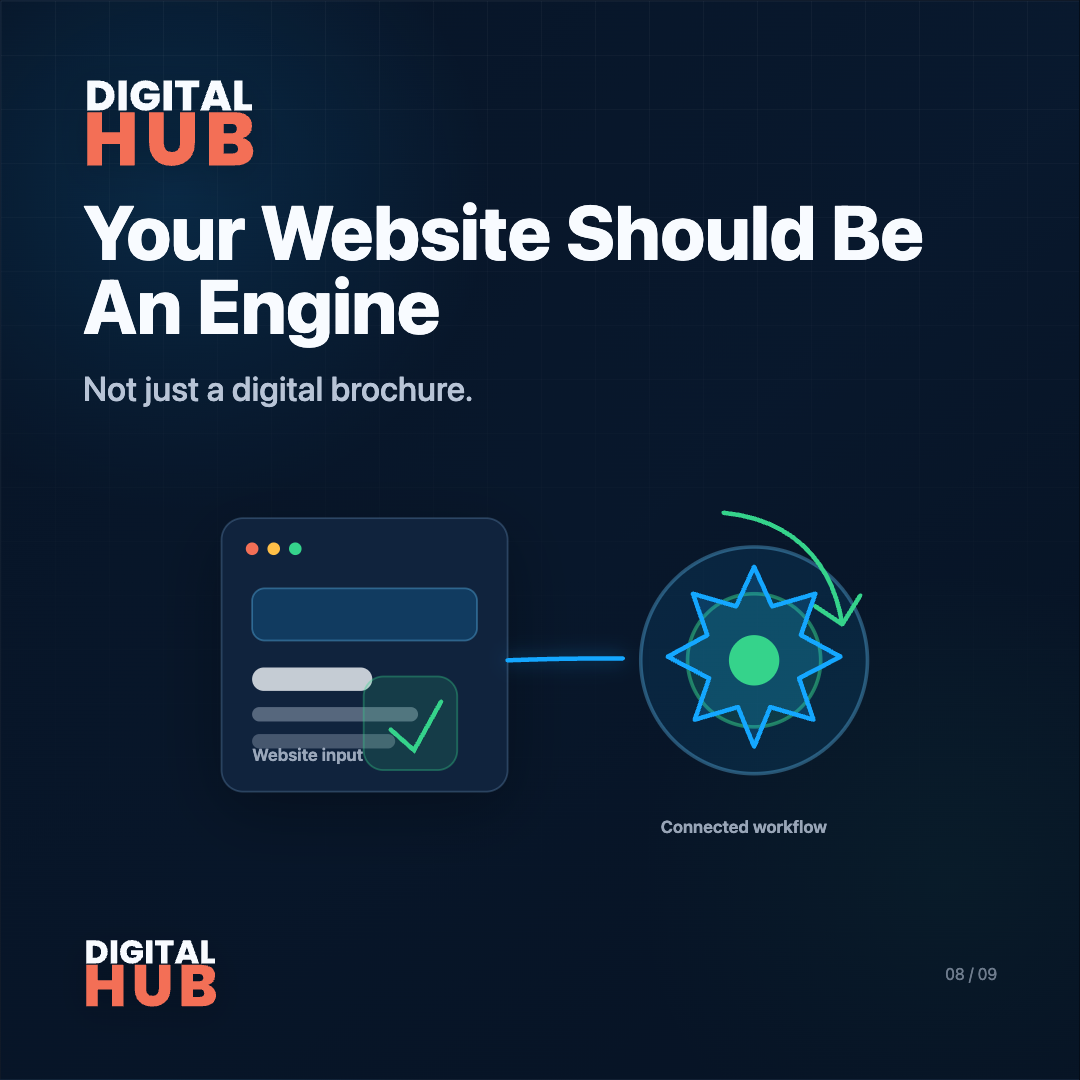
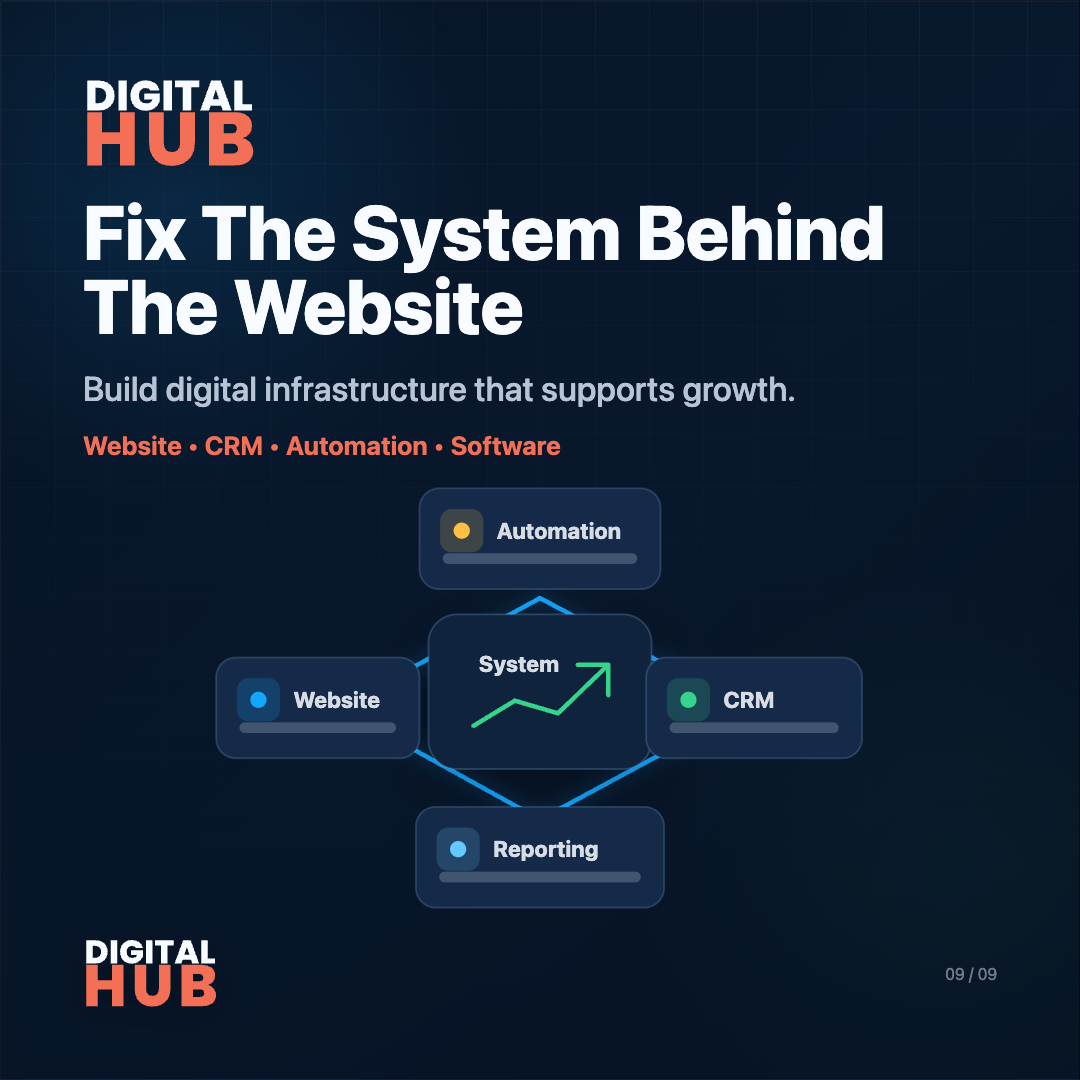
Swipe or use the arrows to step through the system breakdown.
When we audit a client's setup, the same issues show up again and again. None of them are about the website itself. All of them strangle website lead generation before it has a chance to work.
The website sits on one platform. The CRM sits on another. The two do not talk. Enquiries are emailed, copied or rekeyed by hand. By the time a lead reaches the sales team, it has already lost momentum and accuracy.
There is no defined sequence. No reminders. No cadence. Whether a lead gets chased depends on who happens to see the email and how busy they are that day.
Nobody can confidently answer simple questions. How many enquiries did we get last month? What was our conversion rate from form to call? Which service line is producing the most pipeline? The data exists somewhere, but it is fragmented across inboxes, spreadsheets and tools.
Every enquiry is treated the same. A casual student request and a serious six-figure buyer get the same generic reply, in the same order they arrived. The team wastes time on low-intent leads and underserves the high-intent ones.
If a lead does not reply, nothing happens. There is no nudge at day three, no second touch at day seven, no structured re-engagement at day thirty. Pipeline rots quietly in the background.
Leadership relies on gut feel and end-of-month exports. Decisions about marketing spend are made without a clear view of which channels and campaigns actually produced revenue.
There is no agreed definition of a qualified lead, no shared pipeline stages and no consistent next action. Each salesperson runs their own version of the process in their own head.
The website, the form builder, the email tool, the CRM, the calendar booking app and the accounting system all live in separate silos. Data has to be moved manually between them, which means it usually is not moved at all.
Critical lead and customer information lives in a spreadsheet that one person maintains. When that person is on holiday, the business effectively loses visibility of its own pipeline.
If you are not sure whether your issue is the website or the system behind it, run through this checklist. The more of these that apply, the more confident you can be that the system is your real bottleneck.
Website forms go straight to a generic inbox.
Leads are copied manually into a spreadsheet or CRM.
Sales follow-up depends on individual memory rather than a defined process.
Nobody can say with certainty which channel generated a given enquiry.
Your CRM is outdated, half-configured or barely used.
Reporting is slow, manual or routinely inaccurate.
The same admin tasks are repeated every week and waste hours of team time.
Customers regularly have to chase you for updates, quotes or confirmations.
The website looks good but does not drive measurable, attributable growth.
If most of those feel familiar, the answer is not a new homepage. The answer is a better lead management system sitting behind the one you already have.
A serious digital infrastructure setup connects the moving parts of your commercial engine into a single, observable system. At a minimum, that means joining up:
The website itself.
The CRM where customer and pipeline data lives.
The enquiry forms and lead capture points.
The automation layer that triggers actions on key events.
The email follow-up sequences for new and dormant leads.
The sales pipeline with clear stages and ownership.
The booking, quoting or payment process.
The reporting dashboard that leadership actually trusts.
The customer data, kept clean and consistent across tools.
The internal workflows that turn enquiries into delivered work.
When those layers are properly connected, the website stops being a digital brochure and becomes a genuine business asset. Every visit, form fill and click contributes to a system that knows what to do next.
Of all the connections in a digital system, website and CRM integration is the highest-leverage one. It is also the most commonly missed.
When the website and the CRM are properly connected, you get:
Faster lead capture, with enquiries appearing in the CRM the moment a form is submitted.
Better data accuracy, because nothing is being retyped between systems.
Clear lead ownership, with automatic assignment to the right person or team.
Automated follow-ups triggered by enquiry type, source or value.
Better sales visibility for managers who need to see live pipeline rather than a stale spreadsheet.
An improved customer experience, because responses are quicker and more relevant.
Better marketing attribution, because every lead carries its source through to closed-won revenue.
Without that integration, you are running a marketing engine with the gearbox disconnected. Effort goes in. Very little reliably comes out.
CRM automation is not about removing humans from the process. It is about removing friction so the humans can focus on the conversations that actually move deals forward. Some practical examples we build into client systems:
Instant enquiry confirmation emails so the lead knows they have been heard.
Sales team notifications in email or chat the moment a qualifying enquiry lands.
Automatic lead assignment based on service line, region or value.
Follow-up reminders if a lead has not been contacted within a defined window.
Quote request workflows that pull data from the form into a draft proposal.
Booking confirmations and calendar invites without manual back-and-forth.
Customer onboarding sequences that kick off as soon as a deal is marked won.
Review and referral requests at the right moment in the customer lifecycle.
Automated reporting updates to leadership on a defined cadence.
Each of these is a small intervention. Together, they transform website conversion and dramatically improve the economics of every lead the website produces.
We saw this play out clearly with York Racecourse. The Digital Hub delivered a bespoke ticketing and ecommerce solution that contributed to sustained growth in online ticket sales.
The important point is that this was not just a website project. It was a commercial digital system designed around the customer journey, the ticketing process and the operational realities of a major racecourse. The visible website was only the surface. The value came from the structure underneath: the way ticketing, customer data and the sales process were joined into a single, dependable system.
That is the pattern. The businesses that get the best results from their websites are the ones that treat the site as one component of a larger machine, not as a standalone marketing asset.
If you suspect the system is your real problem, you do not need to rebuild everything at once. A focused, sequenced approach almost always outperforms a big-bang rebuild.
Map every channel that produces a lead — organic search, paid ads, referrals, direct, social, email. For each channel, note what data you currently capture and what you do not.
Walk through every step from form submission to closed deal. Who sees the lead first? What do they do? Where does the data go? What gets logged, and what gets lost?
Look for every place where a human is moving data from one system to another, or doing the same task more than once. Each of these is a candidate for business automation.
Replace email-based lead handover with a direct integration. Make sure every form submission creates a properly structured record in the CRM, with source, campaign and timestamp attached.
Build the basic sequences first. Confirmation email to the lead, alert to the right salesperson, reminder if no contact within 24 hours. Layer in more sophisticated logic later.
Build a single dashboard that shows leads by source, conversion rates by stage and revenue by channel. If leadership cannot see it, leadership cannot manage it.
Look at the experience from the customer's side. How quickly do they hear back? How clear is the next step? How professional does it feel compared to your competitors?
Stop measuring success by traffic alone. Track the metrics that actually correlate with revenue: response time, qualified lead rate, conversion rate by stage and average deal value.
Done in this order, the work compounds. Each step makes the next one easier and more valuable.
None of this is an argument against new websites. Sometimes a redesign is genuinely the right move. Specifically, you probably do need a new site if:
The site is technically slow and hurts both conversion and SEO.
The user experience is poor on mobile or hard to navigate.
The messaging is unclear and visitors cannot quickly tell what you do or who you do it for.
It is not properly mobile friendly in 2026 terms.
It does not explain your offer, pricing model or process clearly.
It lacks credible trust signals — case studies, testimonials, recognisable clients.
It is genuinely failing to convert qualified traffic that arrives with intent.
Even then, the new website should be designed and built as part of a wider digital systems for business project. A redesign in isolation, without fixing the CRM, automation and reporting layer, tends to deliver a short-lived bump in confidence followed by the same lead problems six months later.
If you are going to invest in a new site, make it the front door of a properly designed system, not a standalone brochure.
Usually because the system behind the website is weak, not because the website itself is broken. Common causes include no CRM integration, manual follow-up, poor lead tracking and no automation after an enquiry is submitted. Fixing those issues normally produces a bigger uplift than redesigning the site.
In most cases, both eventually — but the CRM and the system around it should come first if your current site is functional. A modern, well-integrated custom CRM system will improve lead handling, follow-up and reporting even before any website work is done.
Automation makes sure every lead is acknowledged immediately, routed to the right person, followed up on a defined schedule and tracked through to a clear outcome. That alone can dramatically improve website leads without any change to traffic or design.
Digital infrastructure is the connected set of systems that runs the commercial side of your business — website, CRM, automation, reporting, payments and internal workflows. It is what turns marketing activity into reliable revenue, rather than a series of disconnected campaigns.
Tell-tale signs include data living in spreadsheets, leads being retyped between tools, slow response times, unclear reporting and a constant feeling that the team is busy but the pipeline is not growing. If any of those sound familiar, your systems are almost certainly not properly joined up.
If your website is not generating leads, do not automatically assume the design is the problem. Look at the system behind it. The CRM, the automation, the follow-up process, the reporting and the integrations between tools usually have far more influence on commercial performance than the colour of a button or the layout of a homepage.
Fix those, and the website you already have will start working harder than a redesigned one ever could on its own.
If your website looks fine but leads are still slipping through the cracks, The Digital Hub can help you build the digital infrastructure behind better business performance.
Get Started
Book a free infrastructure audit. We'll map your current systems, identify gaps, and show you exactly how a connected digital platform can transform your business.
Prefer to talk? 01904 900201
What changes when the website, the CRM and the automation stop being three separate purchases.
Real UK price bands for a custom-built CRM, what moves the cost, and the point at which building beats subscribing.
How to tell when spreadsheets have become a business risk, what replacing them costs, and how to migrate without losing the plot.